
The cost of a 12 inch
The sums for a 500 copy 12 inch, and why the label keeps pressing.
Someone at a panel asked me in October why the label still presses vinyl, and I gave a poor answer. Here is a better one, with sums. These are round figures for a single 12 inch, 500 copies, and they change every six months.
Mastering and cutting, about £450. Plating and test pressings, about £350. Pressing and labels, about £1,150. Sleeves, with the die-cut, about £1 each once the big print run is averaged out, so £500. Getting it from the plant to the distributor, £200. That is £2,650 for a box of records, or £5.30 a record, before anyone has been paid.
A shop sells that record at about £13.99. Take off VAT and the shop's margin, and they have paid around £8.20 for it. The distributor keeps its cut and the label sees about £5.60.
That leaves thirty pence a record. On 500 copies it comes to £150 between the label and the artist for a year's work, if every copy sells and nothing comes back. I did this job from the other side for twenty years, and knew it was tight. I had not understood how tight until it was my spare room.
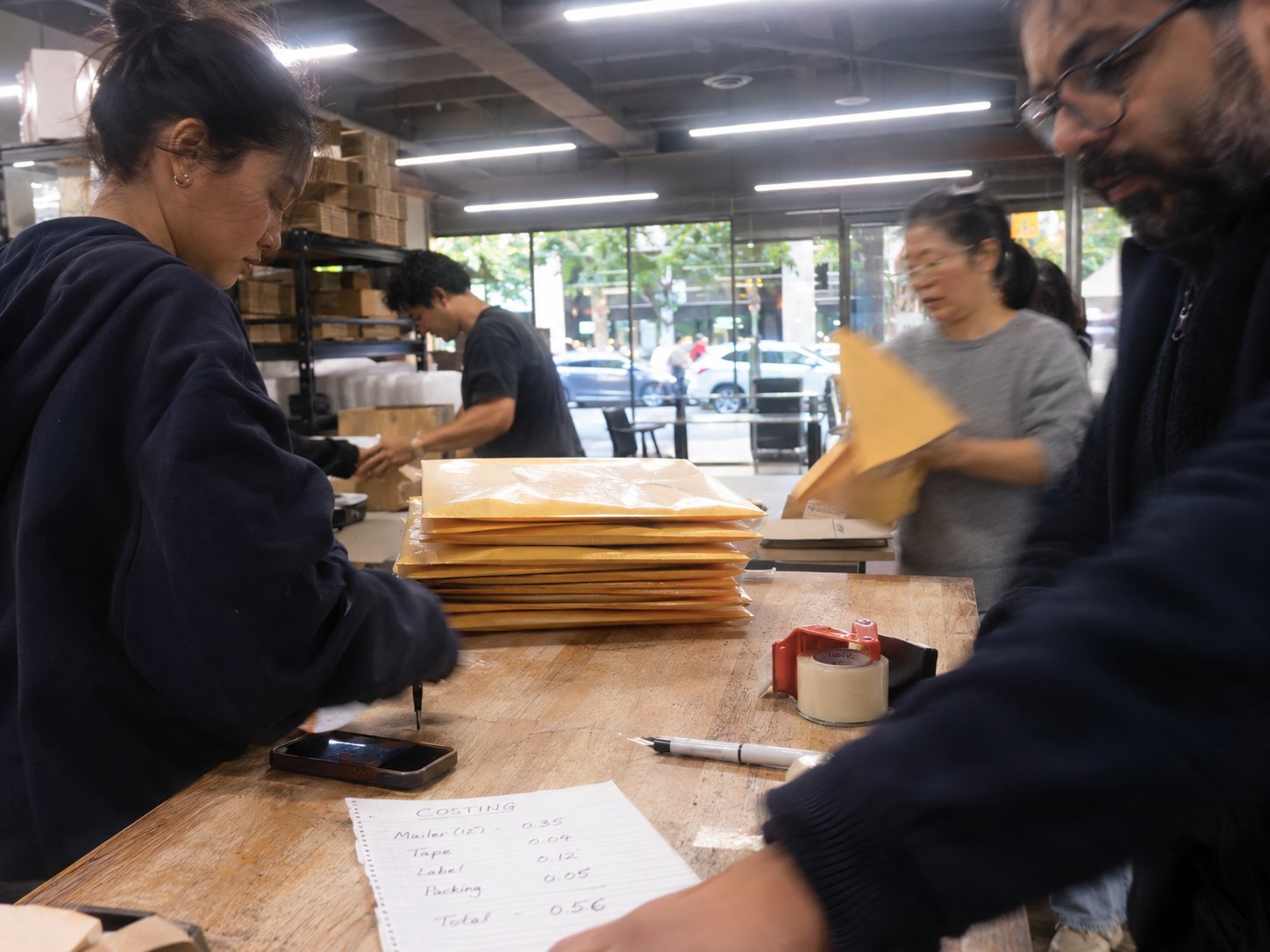
Mail order makes the difference. After VAT, the mailer, the payment fees and the post, a £14 record sent direct leaves about £5 over the cost, which is why I still pack them on Fridays.
So why do it? There are four reasons, in the order I would give them to a bank.
First, a record sets the terms. A DJ with one of these in the bag has paid for it, carries it about and may still be playing it in 2031. Digital sales for most of this catalogue are small, and streaming income on a deep house 12 inch by a lesser-known artist is smaller.
Second, the repress. Pressing another thousand of something people already want is the only reliably good money in this business. "Bassin à Flot" paid for most of last year.
Third, sync, in the months Priya Raman lands something. That has nothing directly to do with vinyl, but a label with a physical catalogue is easier to license from.
Fourth, some of the artists would not release otherwise. Frieda Lux has played vinyl only since 2011, and she expects to find her own records in a shop.
The label has lost money on about one record in three since 2019. Coln has not yet made a profit, and there are no plans to change what it does.